How to Choose the Right Website Designer for Your Small Business
Updated: Jun 18
Without Making an Expensive Mistake!
Choosing the right website designer isn't about finding the lowest price—it's about finding a partner who understands your business, builds websites that convert visitors into customers, follows SEO best practices, and provides long-term support. A professionally designed website should generate leads, build trust, and grow with your business.

How to Choose the Right Website Designer for Your Small Business
Your website is one of the most important investments you'll make for your business.
It's often the first impression potential customers have of your company, and in many cases, it's your best salesperson—working 24 hours a day, seven days a week.
Yet many small business owners choose a website designer based on price alone, only to discover hidden costs, poor communication, outdated technology, or a website that looks nice but fails to generate results.
So how do you choose the right website designer?
This guide will walk you through the most important questions to ask, the red flags to avoid, and the qualities that separate a professional web designer from an expensive mistake.

How to Choose the Right Website Designer for Your Small Business
Why Your Choice Matters
A website isn't just about colors and images.
A professionally designed website should:
✓ Build trust
✓ Rank on Google
✓ Works perfectly on every device
✓ Generate leads
✓ Load quickly
✓ Represent your brand
✓ Support future growth
The right designer creates a business asset—not just a website.
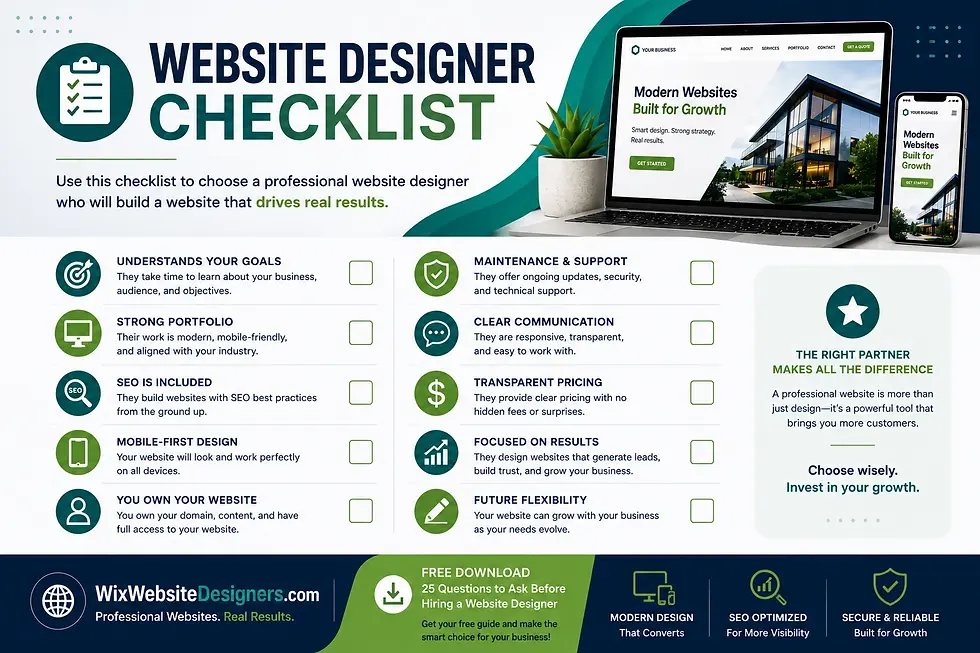
1. Start With Your Business Goals
Before comparing agencies or freelancers, ask yourself:
Do I need more leads?
Am I selling products online?
Do I want more phone calls?
Do I need appointment scheduling?
Am I improving an existing website?
A good website designer will spend time understanding your business before discussing fonts, layouts, or colors.
If the conversation starts with a price instead of your goals, that's a warning sign.
2. Review Their Portfolio (The Right Way)
Don't just ask:
"Does it look good?"
Ask:
Is it mobile-friendly?
Does it load quickly?
Is the navigation simple?
Is the branding consistent?
Is the content easy to scan?
Would you trust this business?
A portfolio should demonstrate strategy, not just creativity.
3. Ask About SEO From Day One
Many beautiful websites never generate traffic because SEO wasn't considered during development.
A professional website should include:
Optimized page titles
Meta descriptions
Structured data (Schema)
Image optimization
Internal linking
Mobile optimization
XML sitemap
Fast loading pages
Remember:
The best website in the world won't generate business if nobody can find it.
4. Make Sure the Website Is Mobile-First
More than half of all visitors browse on smartphones.
Your website should provide an excellent experience on:
Desktop
Laptop
Tablet
Mobile
Responsive design is no longer optional—it's expected by both users and search engines.
5. Understand Who Owns the Website
Always ask:
Do I own the domain?
Do I own the website content?
Can I edit the website myself?
Can I move the website later?
Are there any ongoing contracts?
A professional designer should be transparent about ownership.
6. Don't Choose Based on Price Alone
One of the most common mistakes business owners make is comparing websites like they're identical products.
They're not.
A professional website includes:
Strategy
Design
User experience
SEO
Mobile optimization
Performance
Security
Content structure
Long-term support
The lowest quote often becomes the most expensive decision.
7. Ask About Website Maintenance
Every website requires updates.
Ask whether maintenance includes:
Content updates
Security monitoring
Performance optimization
SEO improvements
Backups
Technical support
Having a long-term partner is just as important as launching the website.
8. Read Reviews & Testimonials
Reviews reveal far more than a portfolio.
Look for comments about:
Communication
Project management
Support
Reliability
Problem solving
Results
Consistent positive experiences are one of the strongest indicators of quality.
9. Choose Someone Who Understands Marketing
Your website should do more than exist.
It should attract visitors and convert them into customers.
Ask whether your designer understands:
SEO
Conversion optimization
Calls-to-action
Local search
User experience
Website analytics
Great websites combine design and marketing.
10. Think Long-Term
Your business will evolve.
Your website should evolve with it.
Choose a platform and designer that allow you to:
Add new pages
Publish blog posts
Improve SEO
Expand services
Scale as your business grows
Future flexibility saves time and money.
Questions to Ask Before Hiring a Website Designer
✔ Can I see your portfolio?
✔ How long will the project take?
✔ What platform do you recommend?
✔ Is SEO included?
✔ Will my website be responsive?
✔ Can I update the content myself?
✔ Do you provide maintenance?
✔ What happens after launch?
✔ Will I own my website?
✔ Can you help with future growth?
Red Flags to Avoid
🚩 Extremely low pricing
🚩 No portfolio
🚩 No SEO discussion
🚩 Generic templates
🚩 No maintenance plan
🚩 Poor communication
🚩 No project timeline
🚩 No clear process
🚩 No strategy session

Why Many Small Businesses Choose Wix Studio
Modern businesses need websites that are:
Fast
Responsive
Secure
Easy to manage
SEO-friendly
Built for growth
Wix Studio combines:
✓ Responsive design
✓ Advanced CMS
✓ Enterprise hosting
✓ Built-in security
✓ Powerful SEO tools
✓ Custom development capabilities
making it an excellent solution for businesses that want a professional website without unnecessary complexity.

Frequently Asked Questions
How much does a professional website cost?
Pricing varies based on features, content, integrations, and SEO requirements. The most important factor is choosing a website that supports your business goals and generates long-term value.
Should I hire a freelancer or an agency?
Both can be excellent choices. Focus on experience, communication, portfolio quality, SEO knowledge, and long-term support rather than business size.
Is Wix Studio good for small businesses?
Yes. Wix Studio offers responsive design, built-in SEO tools, secure hosting, and advanced content management capabilities that make it an excellent platform for modern businesses.
How long does a professional website take to build?
Most business websites are completed within two to eight weeks, depending on complexity, content availability, and revisions.
Final Thoughts
Choosing a website designer isn't just hiring someone to create pages.
You're selecting a partner who will help shape your online presence, represent your brand, and support your business growth for years to come.
Take the time to ask the right questions, review portfolios carefully, and choose someone who understands both design and digital marketing.
The right decision today can lead to more traffic, better search rankings, and more customers tomorrow.
Ready to Build a Website That Works as Hard as You Do?
Whether you're launching a new business or redesigning an existing website, we're here to help.
Our Services
✔ Custom Website Design
✔ Wix Studio Development
✔ Website Redesign
✔ SEO Optimization
✔ Website Maintenance & Support
✔ Custom Velo Development
Why Choose Us?
Responsive, mobile-first websites
SEO-friendly architecture
Modern Wix Studio development
Personalized support
Transparent pricing
Long-term partnership
Need a professional Wix Studio website?
Ready to build a high-performance Wix Studio website?
💼 Check Out Our Packages for Professional Web Design
📅 Book a Free Consultation to Get Started with a Wix Certified Partner


